










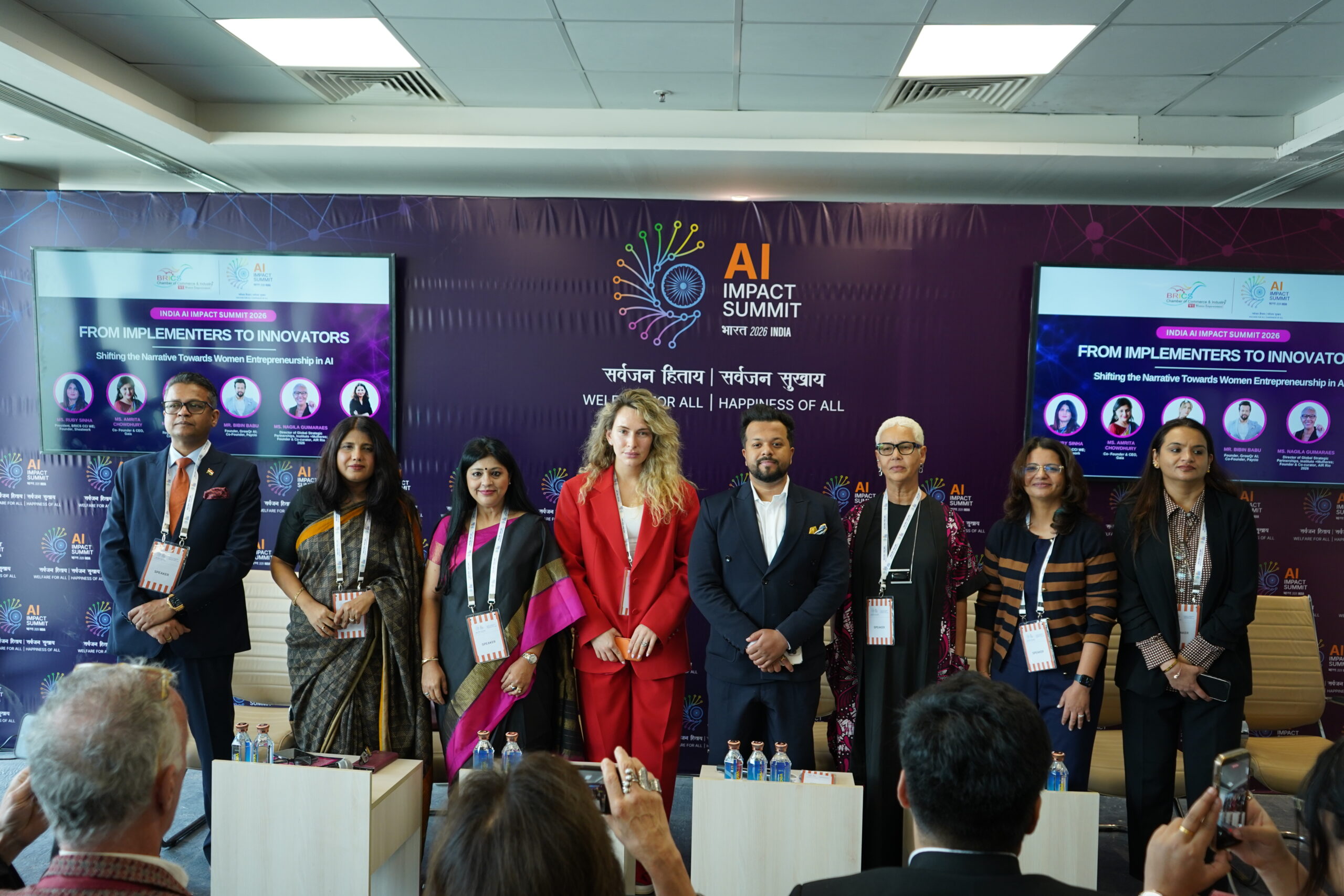
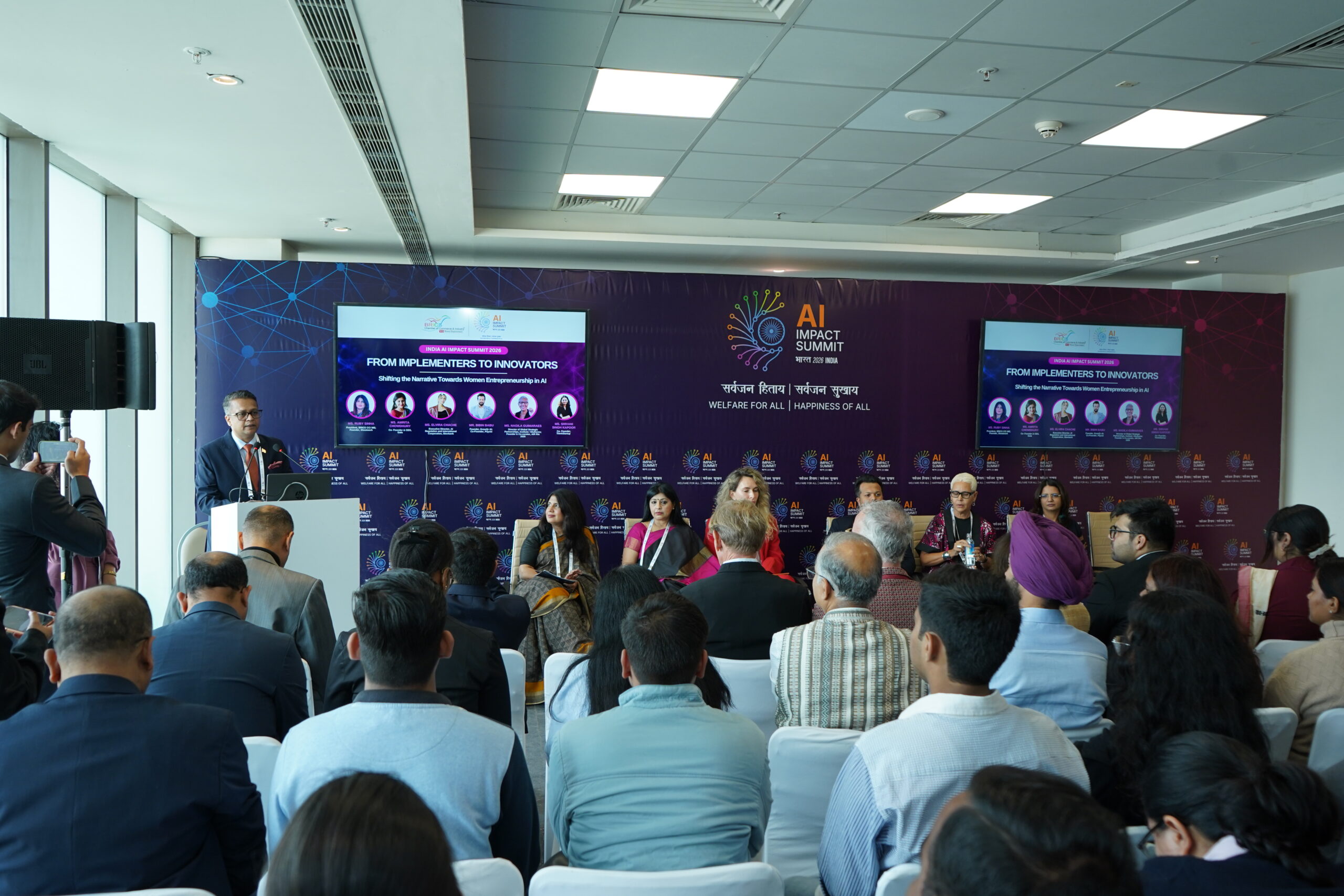
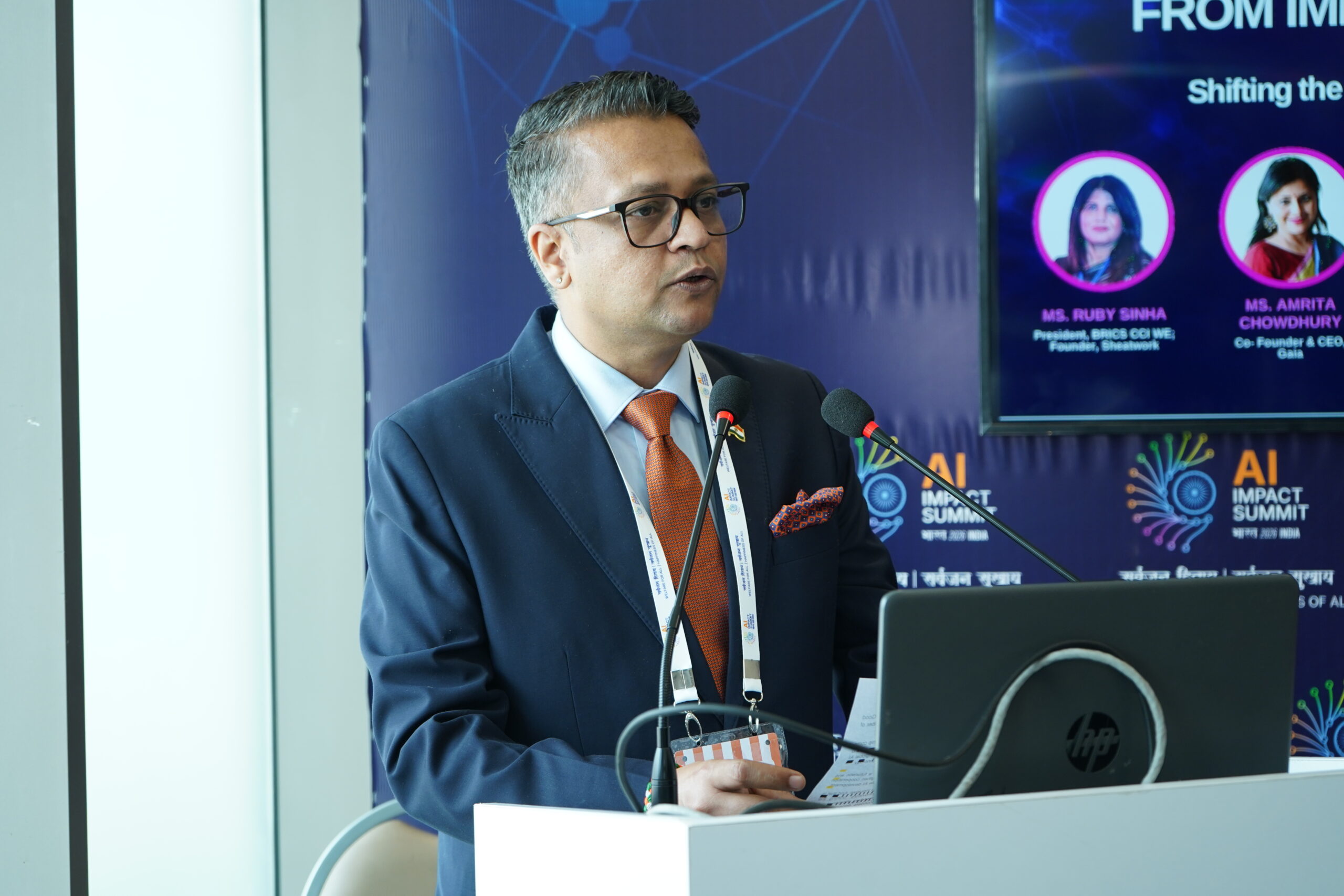
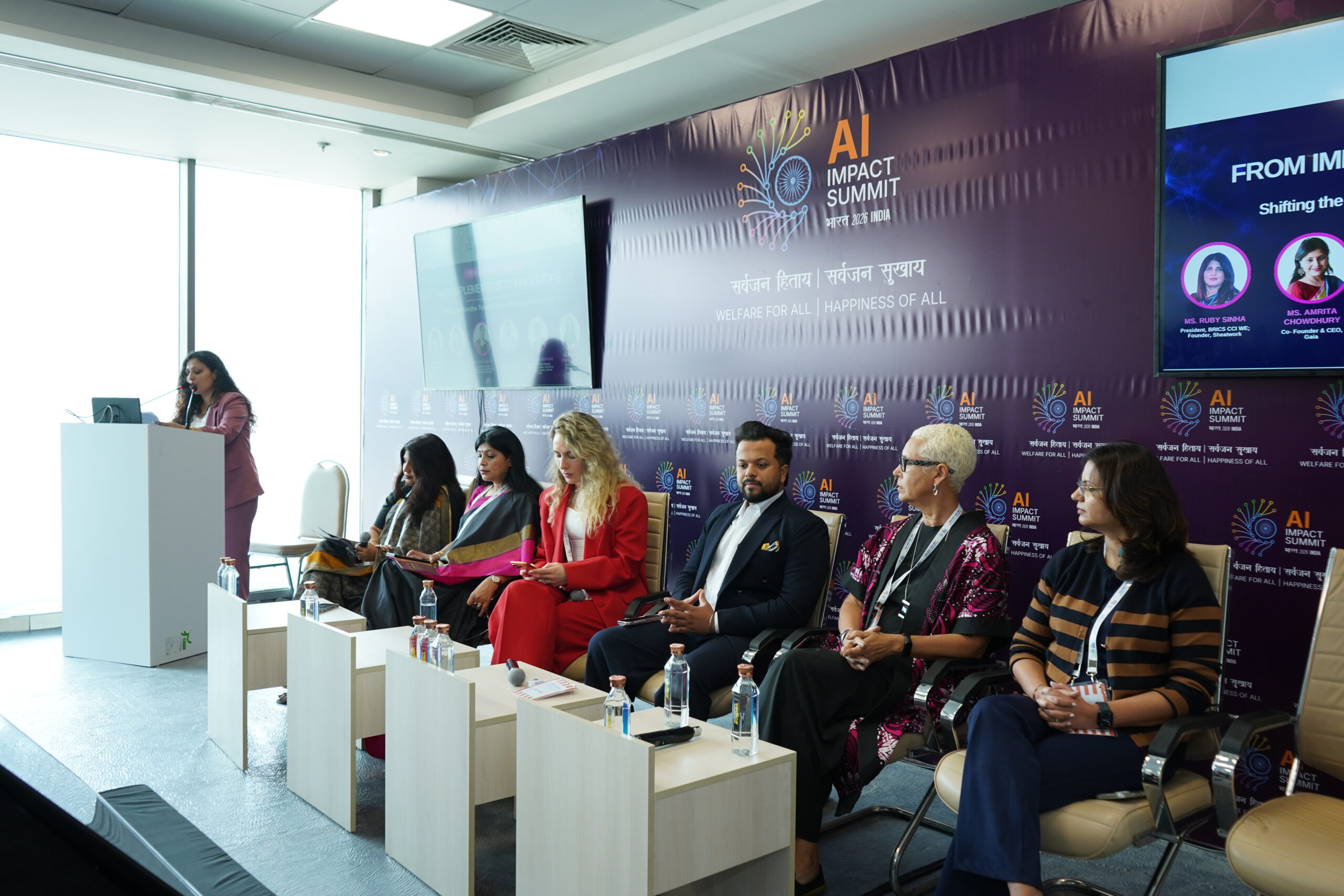
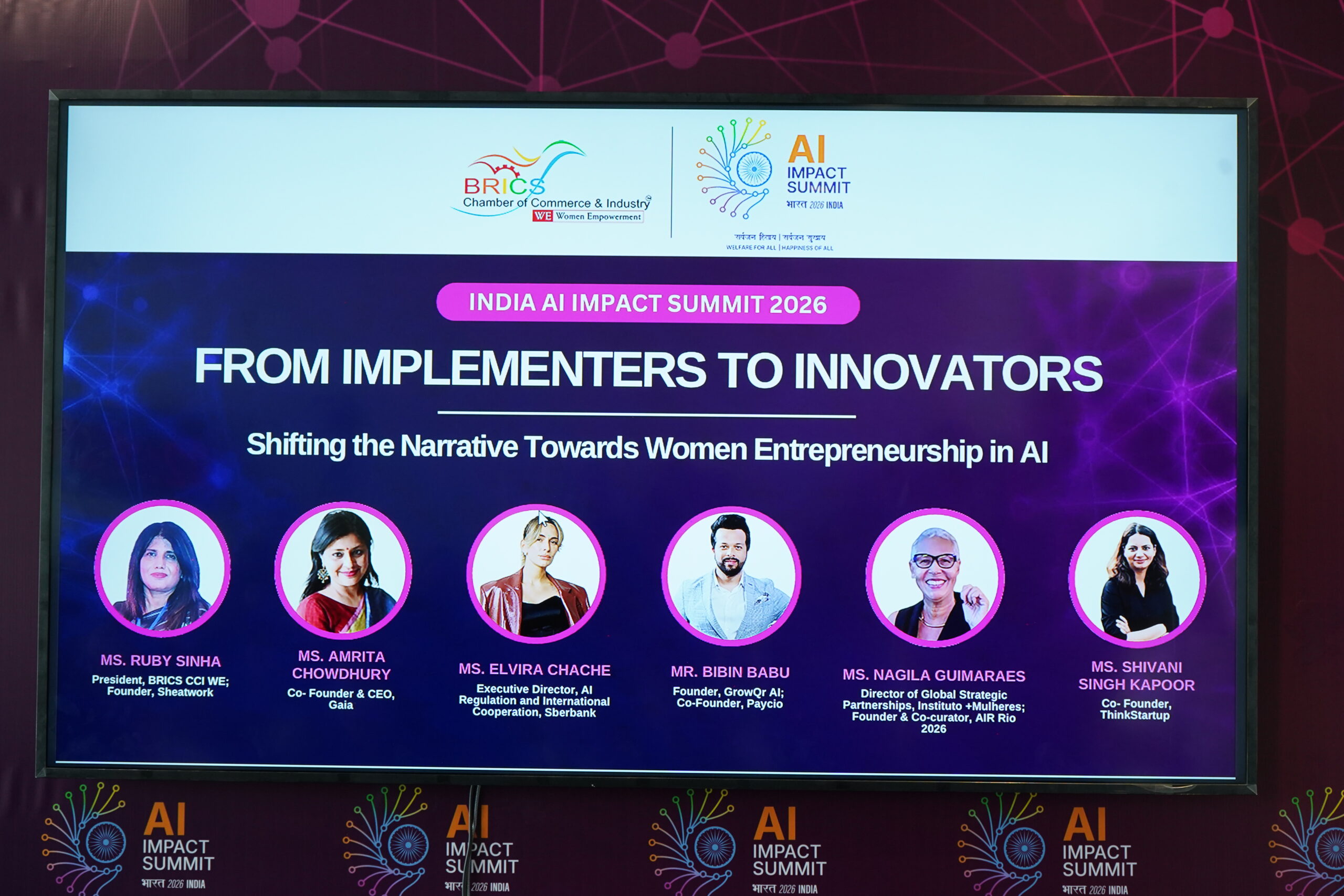
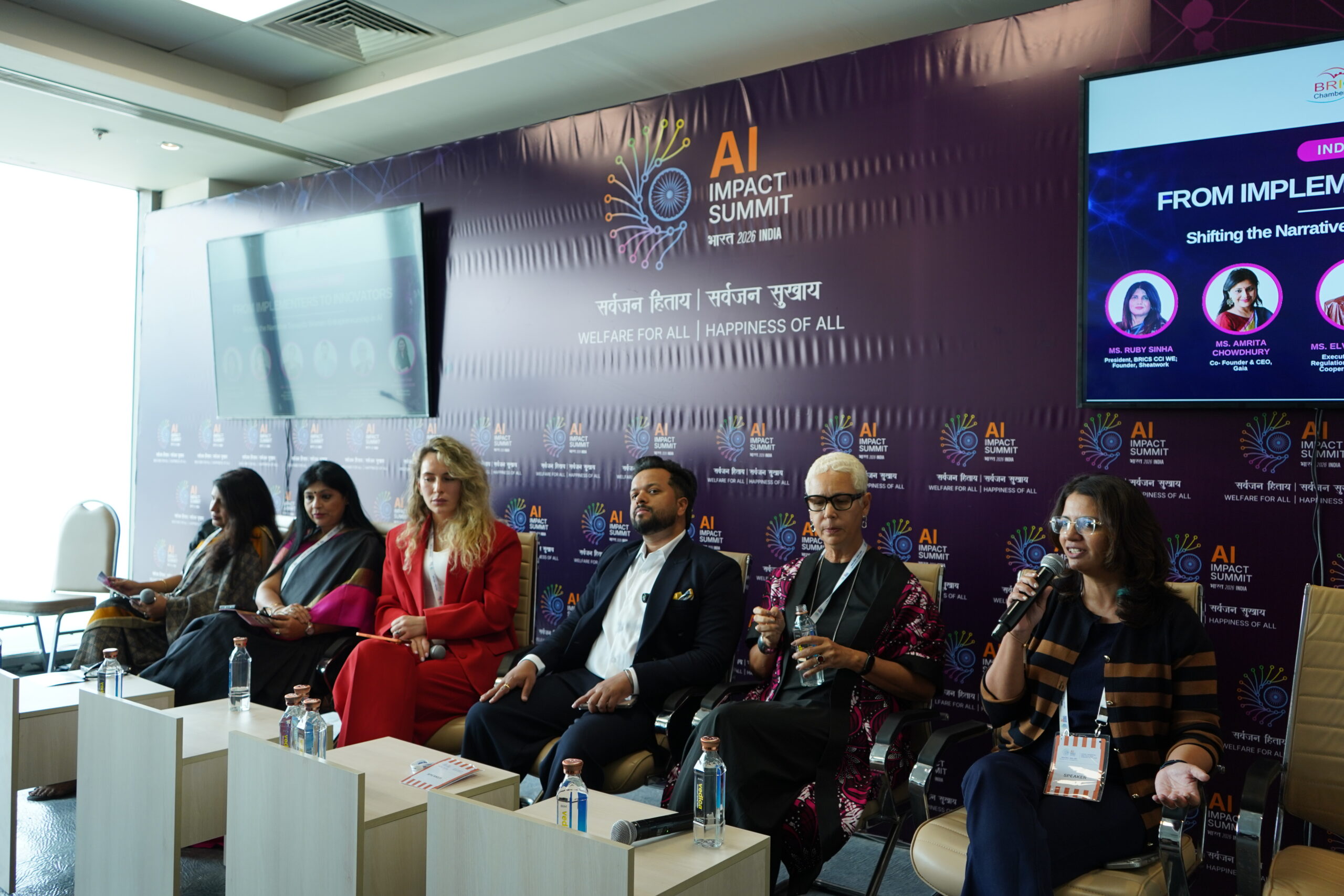
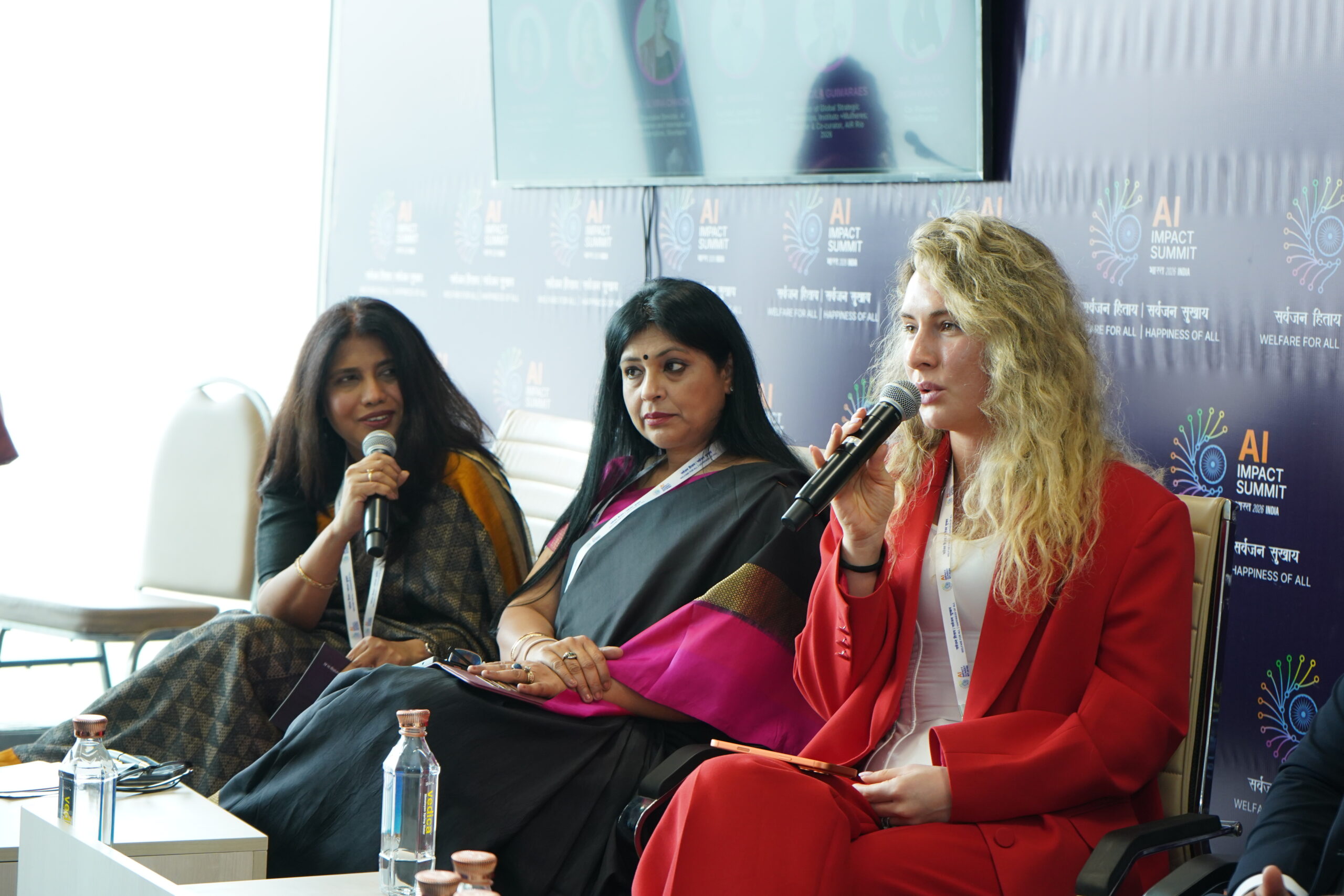
The BRICS Chamber of Commerce & Industry recently participated in the India AI Impact Summit 2026 and organized a session titled “Shifting the Narrative Towards Women Entrepreneurship in AI.” The discussion spotlighted women’s growing leadership and entrepreneurial role in the evolving AI ecosystem. Organized under the BRICS CCI Women Entrepreneurs (WE) Vertical, this panel explored how women are moving beyond traditional supporting roles to become innovators, leaders, and entrepreneurs shaping the future of Artificial Intelligence.
The discussion examined the opportunities and challenges women encounter as they transition from being consumers of AI technologies to becoming primary architects of innovative AI solutions. Speakers highlighted several critical areas:
- Inclusive Innovation – Creating AI systems and development processes that reflect diverse perspectives and address the needs of varied communities. Women-led innovation brings unique problem-solving approaches and ethical grounding to AI development.
- Ethical AI Development – Ethical frameworks, transparency, and accountability in AI are not merely compliance requirements but core drivers of sustainable, trustworthy innovation. This is an area where women entrepreneurs are establishing new standards and leading by example.
- Global Collaboration – Cross-border partnerships, knowledge-sharing, and mutual support among women-led enterprises create stronger networks and accelerate the development of solutions with global impact. Strengthening international cooperation is essential to building a more inclusive AI-driven future.
The panel brought together distinguished speakers from across the globe:
- Bibin Babu – Founder, GrowQr AI; Co-Founder, Paycio
- Amrita Chowdhury – Co-Founder & CEO, Gaia
- Natalya Popova – Innopraktika
- Ruby Sinha – President, BRICS CCI WE; Founder, Sheatwork
- Shivani Singh Kapoor – Co-Founder, ThinkStartup
- Nigela Guimaraes – Director of Global Strategic Partnerships, Instituto +Mulheres; Founder & Co-Curator, AIR Rio 2026
These speakers shared insights on enabling women-led innovation and strengthening global cooperation to build a more inclusive AI-driven future.
The session concluded with a clear message: when women lead innovation in AI, industries become more resilient, solutions become more ethical, and ecosystems become more inclusive. Strengthening pathways for women-led enterprises requires deliberate investment in education, mentorship, access to capital, and policy frameworks that recognize and reward women entrepreneurs in AI. The future of AI is shaped not just by technology—it is shaped by the people building it.